|
Graphic Novel Reading Tips

Last updated Tuesday, June 17, 2026
Graphic novels are a great way to encourage kids to read, using both words and art to tell a story. Graphic novels present different challenges than novels, so here are practical, easy tips about reading graphic novels aloud to make your reading club sessions engaging and fun!
Show the artwork: Show the pages for 5-10 seconds before you start reading it. Make sure to point out the artwork, facial expressions, color choices, and background details so students don't miss any of the story. Ask students what they think a background detail, color choice, or facial expression means.
Use character voices: Graphic novels often have 3-4 main characters. Commit to a distinct vocal quality for each, something consistent such as higher/lower pitch, faster/slower pace, so kids track who's speaking without you announcing it every single time. For example, you can use a high voice for the main character's mom. Have fun - you can exaggerate character voices and tones to match the art.
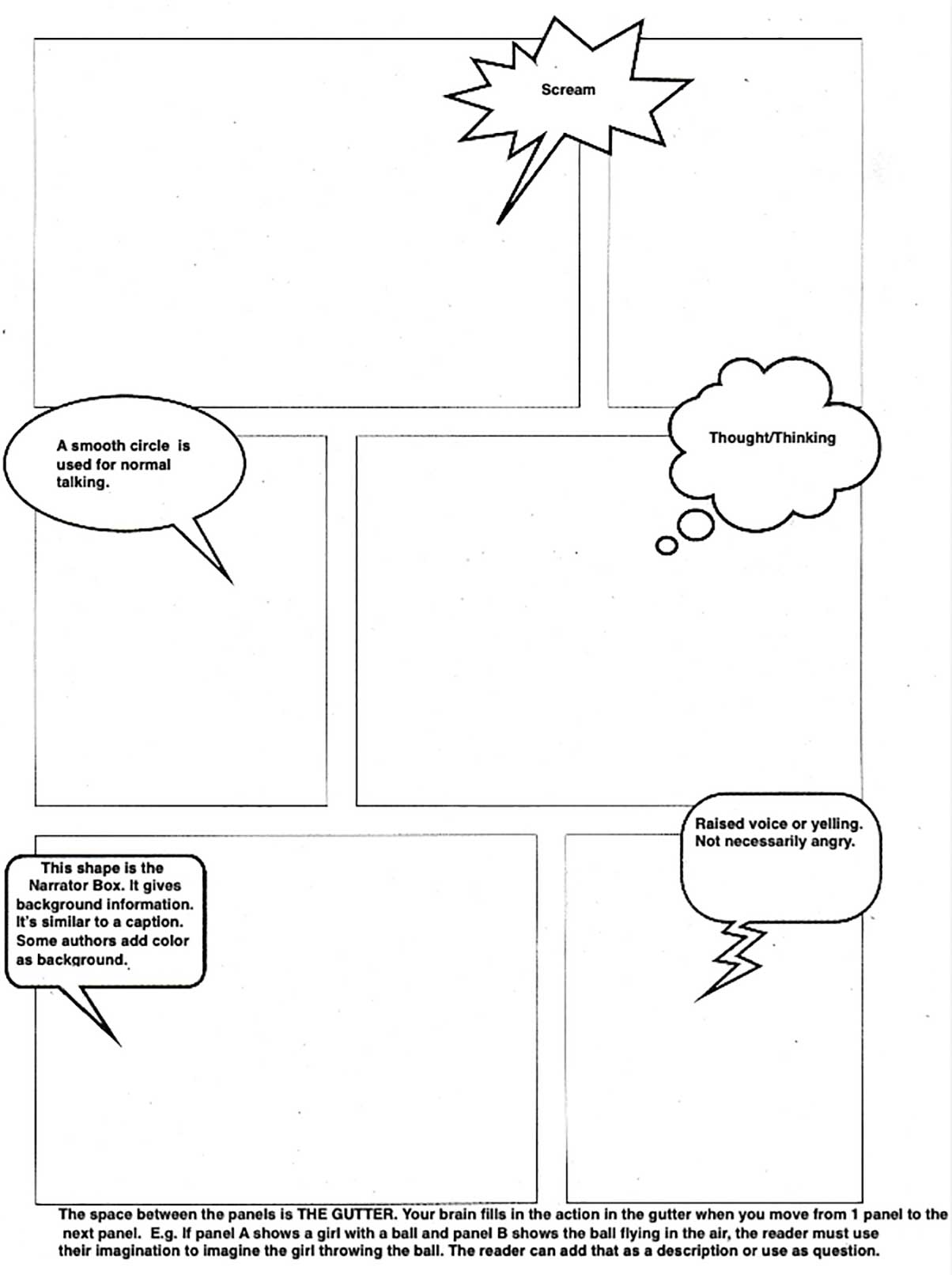
Pay attention to the speech bubbles: The shapes of the word bubbles tell you how a character is speaking or thinking (see the bottom of this page for an illustration):
Speech Ballons: Smooth circles for normal talking.
Thought Clouds: Fluffy clouds, often with little dots, for silent thoughts.
Jagged Bubbles: Spiky edges for loud yelling or screaming.
Narrator Boxes: Square boxes that give background information.
Remember: Some students may not know the meaning of the different speech bubbles, so you can encourage interaction and ask, e.g. "Does a jagged bubble mean whisper or loud?"
Add "said" tags if you want to: For a speech bubble you can add, "Jordan said..."
For action panels where the story information is through image alone (e.g. character's expression, or running, encourage interaction and ask, "What do you think is happening here?" or "How do you think the character feels?"
Analyze the "Gutter": The Gutter is the blank space between panels (see the bottom of this page for an illustration). Ask the kids what actions or time jumps happened between the drawings.
Bring Action Scenes to Life: if there are several panels of action without dialogue, add your own sound effects (e.g. "Pow" or "Swish") and read out loud any signs or words in the background of the panel.
Cliffhanger Panels: Sometimes the page-turn in a graphic novel is a natural dramatic beat - use it! You can describe something, e.g. "She's just about to open the door," and before you turn the page, ask students to predict what will happen next based on the art and speech.
|