|
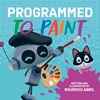
Programmed to Paint

Last updated Wednesday, September 2, 2026
Author: Mauricio Abril
Date of Publication: 2024
ISBN: 0593523776
Grade Level: 2nd (GLCs: Click here for grade level guidelines.)
Date(s) Used: Sep. 2026
Synopsis:
Pintro is a robot who is practically perfect. He knows all there is to know about how to garden, how to bake, and especially everything about math. But the one thing Pintro does not know how to do? Make art! Whenever he tries, he just produces a perfect copy of the subject. While that's not a bad thing, he knows there's more to art than that. Can Pintro connect with his creativity and overcome his programming so he can finally paint the way he wants to?
| Note to readers: |
| • |
Pintro is a robot struggling to creatively paint. He makes perfect, picture-like copies of art and living things but wants to make his art expressive. Start with a picture walk so the children can anticipate the story and have a dialogue. When discussing vocabulary, break the words down and review how the ending can change the meaning so the children can start learning how to break down bigger words.
|
| Discussion topics for before reading: |
| • |
Who is an illustrator, and what do they do?
|
| • |
What do you think the story will be about?
|
| • |
When was the last time you painted or created an art piece? What was it?
|
| • |
Where does your creativity come from?
Vocabulary
|
| • |
Programmed (Program, Programming) - Coded/ing instructions to a machine or computer that tells it how to operate/work.
|
| • |
Illustrator (Illustrated/ing) - a person who draws or creates pictures for magazines, books, advertising, etc.
|
| • |
Creativity (Creative, Creation) - the use of the imagination or original ideas, especially in the production of an artistic work
|
| • |
Squiggly - Lines that aren't straight.
|
| • |
Perspective - an attitude or the way someone thinks about something or the world.
|
| Discussion topics for during/after reading: |
| • |
What do you think Pintro doesn't know?
|
| • |
Have you ever felt like your art was missing something? If yes, what was it missing, and how did you find it?
|
| • |
Should art have mistakes in it? Why or why not?
|
| • |
Who are the better artists: robots or humans? Why?
|
| Craft ideas: |
| • |
Use the brown paper bags and have the kids draw a robot's face for a puppet. Then cut strips of paper and fold them into small squares, then glue them onto the bag to make the robot's arms, legs, antennas, and other limbs.
|
| • |
Draw robots.
|
| Special activities: |
| • |
Ask the kids if they want to show you how they do the robot / dance or move like a robot
|
| • |
Talk with the kids about how they feel about robots; ask what they want them to do, if they feel scared of them or excited by them.
|
*Note: These craft ideas are just suggestions.
You can use them, but you don't have to use them.
You can expand upon them, or add your own twist.
Remember, though, that the focus of your time should
not be on the development and execution of a craft;
the focus should be on the read-aloud and the
enjoyment of the book!
|